

Information Box-
| What you’re looking for | Answer |
| Best overall university | I.M. Sechenov First Moscow State Medical University |
| Most affordable university | Bashkir State Medical University / Orenburg State Medical University |
| Highest ranked university | I.M. Sechenov First Moscow State Medical University |
| Best clinical exposure | Kazan State Medical University, Pavlov First State Medical University |
| Lowest living cost | Orenburg, Mari State, Bashkir State (regional cities) |
| Total budget (6 years, all-in) | ₹20 lakh – ₹60 lakh, depending on university and city |
| Duration | 6 years (5 years academic + 1 year internship) |
| NEET required | Yes, mandatory — no exceptions |
| English medium available | Yes, at all universities listed here |
| Can students practice in India? | Yes, after clearing FMGE/NExT screening exam post-graduation |
| Expert recommendation | Choose the university for its clinical training and FMGE track record first, fee discount second |
Quick Comparison Table: Top 10 Medical Universities in Russia
| University | Location | Annual Tuition Fees | Hostel Fees (Annual) | Estimated Total Budget (6 Years) | NMC Approved |
| I.M. Sechenov First Moscow State Medical University | Moscow | ₹5.5–7 lakh | ₹1–1.5 lakh | ₹45–60 lakh | Yes |
| Kazan State Medical University | Kazan | ₹4–4.5 lakh | ₹80,000–1.2 lakh | ₹30–38 lakh | Yes |
| Pavlov First State Medical University | St. Petersburg | ₹4.5–5.5 lakh | ₹1–1.3 lakh | ₹28–35 lakh | Yes |
| Orenburg State Medical University | Orenburg | ₹3.5–4 lakh | ₹60,000–90,000 | ₹21–27 lakh | Yes |
| Mari State University | Yoshkar-Ola | ₹3.5–4 lakh | ₹60,000–85,000 | ₹22–28 lakh | Yes |
| Crimea Federal University (Georgievsky Medical Academy) | Simferopol | ₹3.5–4.5 lakh | ₹70,000–1 lakh | ₹23–30 lakh | Yes* |
| Bashkir State Medical University | Ufa | ₹3.5–4 lakh | ₹60,000–85,000 | ₹21–26 lakh | Yes |
| Perm State Medical University | Perm | ₹4–4.5 lakh | ₹75,000–1 lakh | ₹26–32 lakh | Yes |
| Kazan Federal University | Kazan | ₹4.5–5 lakh | ₹80,000–1.2 lakh | ₹35–42 lakh | Yes |
| RUDN University (Peoples’ Friendship University of Russia) | Moscow | ₹5–6.5 lakh | ₹1–1.5 lakh | ₹45–55 lakh | Yes |
Note – *Crimea Federal University’s recognition status has historically required extra verification due to the region’s disputed political status — always cross-check its current NMC listing before applying, since this can affect visa and document processing.
All figures are estimates for the 2026 intake, based on current publicly available fee data. Confirm exact figures with the university’s official admission office, since Ruble-Rupee exchange rates and annual fee revisions affect the final number.
Why Study MBBS in Russia?
Quick answer: Russia offers NMC-approved, WHO-recognised, English-medium MBBS programs at a fraction of Indian private-college fees, with over 60 government-funded medical universities and decades of experience training international students.
When a family walks into our office with a NEET score that doesn’t stretch to an affordable Indian seat, Russia is usually one of the first countries we bring up — and for good reason. Russia has more than 60 government-funded medical universities recognised internationally, most running fully English-medium MBBS programs that comply with NMC’s regulatory framework. Annual tuition typically falls between $3,000 and $12,000, which is a different universe entirely from what private colleges in India charge for a management or NRI quota seat.
The subsidised nature of Russian government education is the real reason costs stay this low. These aren’t private for-profit institutions charging what the market will bear — they’re state-funded universities where international tuition is set to cover costs, not maximise revenue. That’s also why fee structures tend to stay relatively stable year to year, compared to some private colleges elsewhere that revise fees unpredictably.
Why Indian Students Prefer Russia
Three things come up again and again in conversations with students who’ve already studied there: cost, clinical exposure, and community.
Cost is the obvious one — a six-year MBBS in Russia, all-in, typically lands between ₹20 lakh and ₹60 lakh depending on the university and city, well below most private-India options.
Clinical exposure matters more than families realise going in. Russian medical universities are attached to large government hospitals with genuinely high patient volumes, particularly in cities like Kazan, Moscow, and St. Petersburg — students get real bedside experience, not just lecture-hall theory.
Community is the quiet factor that makes or breaks a student’s experience. Cities like Kazan, Orenburg, and Ufa now have well-established Indian student networks, Indian messes, temples, and grocery stores. A first-year student landing in Kazan today walks into a support system that simply didn’t exist a decade ago.
Why Choose Government Medical Universities in Russia?
Every university on this list is a government institution, not a private one — and that distinction matters for a specific reason: transparent, merit-based admission with no donation or capitation fees. Unlike private management-quota admissions in India, Russian government universities admit purely on documented eligibility (NEET score, PCB percentage, age) with a published fee structure. There’s no negotiation, no “under the table” premium, and no ambiguity about what you’re paying for.
Top 10 Medical Universities in Russia for Indian Students (2026)
A note before we get into individual universities: rankings here are not simply “best to worst.” We’ve ordered them by a mix of reputation, clinical training quality, and how consistently our own students have done well there — but the right university for your child depends on budget and comfort level as much as prestige. Read the “Who Should Choose This University” line for each one; it matters more than the ranking position.
1. I.M. Sechenov First Moscow State Medical University

Overview: Russia’s oldest and most prestigious medical university, and the closest thing Russian medical education has to a global flagship institution.
Year Established: 1758
Location: Moscow
Website: https://www.sechenov.ru/eng/
NMC Status: Approved
WHO Recognition: Yes, listed in the World Directory of Medical Schools
QS Ranking: Regularly featured among the top medical universities in Russia and within global subject rankings for medicine
Annual Tuition: ₹5.5–7 lakh
Hostel Fees: ₹1–1.5 lakh/year
Living Cost: ₹25,000–35,000/month (Moscow’s cost of living runs higher than regional cities) Medium of Instruction: English, with optional Russian language classes
Admission Eligibility: NEET qualifying score, 50% in PCB (40% for reserved categories), minimum age 17
Hospital Training: Attached to some of Moscow’s largest teaching hospitals, with a strong research ecosystem
Campus Facilities: Modern labs, well-stocked libraries, dedicated international student support Indian Student Strength: Moderate — smaller Indian cohort than Kazan, but a well-organised student association
Pros: Unmatched global reputation, strong research exposure, excellent for students eyeing postgraduate study abroad later
Cons: Highest fees on this list; Moscow’s living costs add up quickly
Who Should Choose This University: Families with a higher budget (₹45 lakh+) who want the strongest brand-name recognition and are comfortable with Moscow’s cost of living.
2. Kazan State Medical University
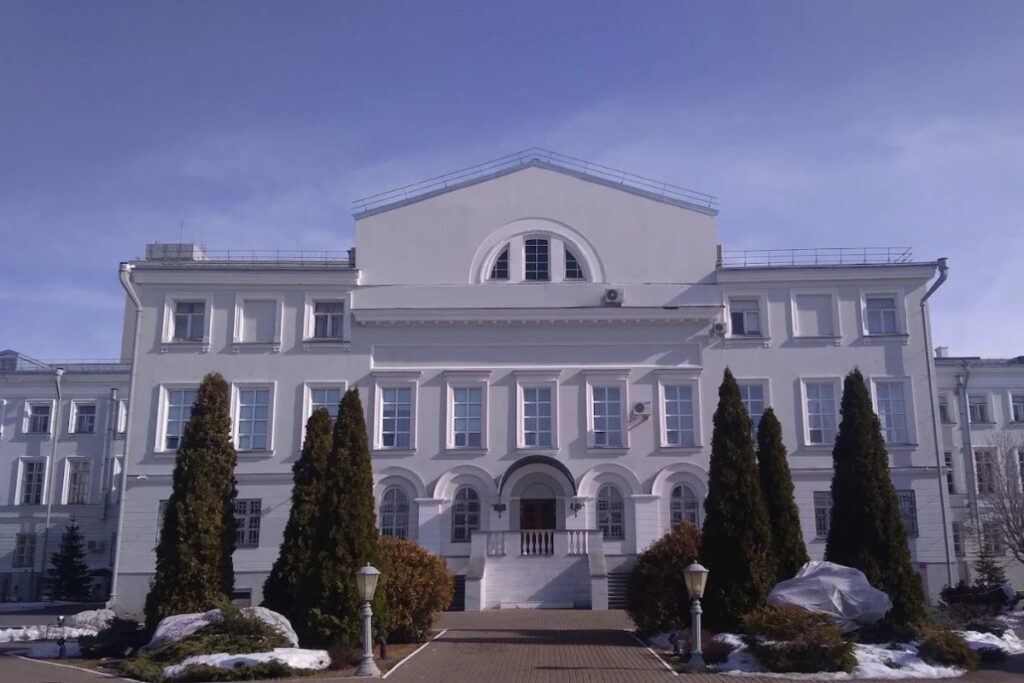
Overview: One of the most popular choices among Indian students today, largely because of its enormous, well-established Indian community and consistently strong clinical training.
Year Established: 1814
Location: Kazan, Republic of Tatarstan
Website: https://kazanstatemedicaluniversity.in/
NMC Status: Approved
WHO Recognition: Yes
QS Ranking: Not separately ranked, but consistently rated among Russia’s most reputable medical schools by education consultants
Annual Tuition: ₹4–4.5 lakh
Hostel Fees: ₹80,000–1.2 lakh/year
Living Cost: ₹15,000–22,000/month
Medium of Instruction: English
Admission Eligibility: NEET qualifying score, 50% PCB (40% reserved), age 17+
Hospital Training: Strong affiliated hospital network across Kazan; genuinely good patient exposure from early clinical years
Campus Facilities: Modern hostels, dedicated Indian mess options, active student clubs
Indian Student Strength: Very high — one of the largest Indian student populations of any Russian medical university
Pros: Excellent balance of fees and clinical quality; large peer support network reduces homesickness and culture shock significantly
Cons: Popularity means larger batch sizes in some years, which can mean more competition for hands-on clinical slots
Who Should Choose This University: Students who want strong clinical training at a moderate fee, and value having a large, established Indian community around them.
3. Pavlov First State Medical University

Overview: A historic St. Petersburg institution with a strong research tradition and an international reputation that punches above its fee level.
Year Established: 1897
Location: St. Petersburg
Website: https://pavlov.university/
NMC Status: Approved
WHO Recognition: Yes
QS Ranking: Regularly featured in Russia’s top medical university lists
Annual Tuition: ₹4.5–5.5 lakh
Hostel Fees: ₹1–1.3 lakh/year
Living Cost: ₹20,000–28,000/month
Medium of Instruction: English
Admission Eligibility: NEET qualifying score, 50% PCB (40% reserved), age 17+
Hospital Training: Strong research-linked clinical exposure; well-regarded among consultants for producing academically strong graduates
Campus Facilities: Solid infrastructure, active international office
Indian Student Strength: Moderate
Pros: Strong academic reputation, excellent research exposure, St. Petersburg is a genuinely pleasant city to live in for six years
Cons: Fees sit above the budget-university tier without quite matching Sechenov’s global brand recognition
Who Should Choose This University: Students who want a research-oriented education and a well-rounded city experience, without paying Moscow-level fees.
4. Orenburg State Medical University

Overview: One of the most budget-friendly, reliable options for Indian families, with a track record our counselors trust for financially constrained students who still want a solid education. Year Established: 1944
Location: Orenburg
Website: https://www.orenburgsmu.com/
NMC Status: Approved
WHO Recognition: Yes
QS Ranking: Not internationally ranked, but well-regarded regionally for medical training Annual Tuition: ₹3.5–4 lakh
Hostel Fees: ₹60,000–90,000/year
Living Cost: ₹12,000–18,000/month
Medium of Instruction: English
Admission Eligibility: NEET qualifying score, 50% PCB (40% reserved), age 17+
Hospital Training: Good regional hospital exposure
Campus Facilities: Functional hostels, an established Indian mess, reasonably priced amenities
Indian Student Strength: High
Pros: One of the lowest total-cost options on this list without compromising NMC compliance
Cons: Smaller city means fewer entertainment and travel options compared to Moscow or St. Petersburg
Who Should Choose This University: Budget-conscious families who want to minimise total spend while still getting a properly recognised degree and a supportive Indian community.
5. Mari State University
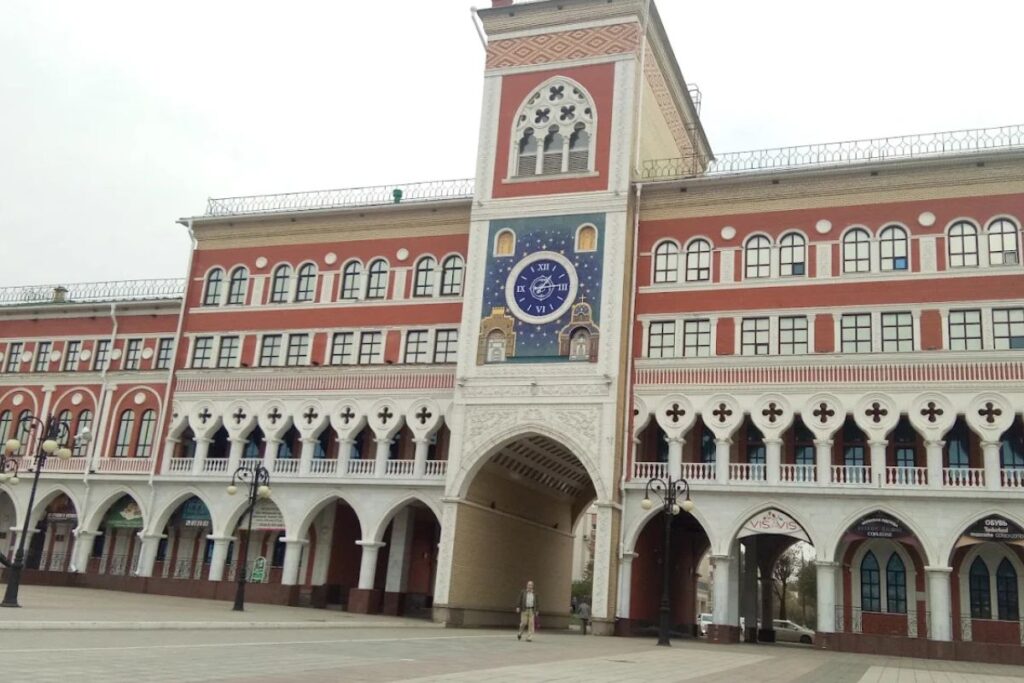
Overview: A quieter, more affordable option that’s steadily grown its reputation among Indian students for reliable administration and modern facilities.
Year Established: 1972
Location: Yoshkar-Ola, Mari El Republic
Website: https://maristateuniversity.com/
NMC Status: Approved
WHO Recognition: Yes
QS Ranking: Not internationally ranked
Annual Tuition: ₹3.5–4 lakh
Hostel Fees: ₹60,000–85,000/year
Living Cost: ₹12,000–18,000/month
Medium of Instruction: English
Admission Eligibility: NEET qualifying score, 50% PCB (40% reserved), age 17+
Hospital Training: Adequate, with growing affiliated hospital tie-ups
Campus Facilities: Modern campus for its size; steady investment in international student infrastructure in recent years
Indian Student Strength: Moderate, growing year on year
Pros: Reasonable fees, calm environment for students who prefer a smaller-city pace over a big metro
Cons: Smaller Indian community than Kazan or Orenburg — worth weighing for students who lean on peer support heavily
Who Should Choose This University: Students who want an affordable, low-distraction environment and don’t mind a smaller expat community.
6. Crimea Federal University (Georgievsky Medical Academy)

Overview: An older, well-regarded medical academy offering multiple specialisations, though its regional status means extra diligence is required before applying.
Year Established: 1918
Location: Simferopol, Crimea
Website: https://crimeanfederaluniversity.com/
NMC Status: Approved — but verify current status directly before applying, given Crimea’s disputed political status
WHO Recognition: Listed — same caveat applies
QS Ranking: Not internationally ranked
Annual Tuition: ₹3.5–4.5 lakh
Hostel Fees: ₹70,000–1 lakh/year
Living Cost: ₹12,000–20,000/month
Medium of Instruction: English
Admission Eligibility: NEET qualifying score, 50% PCB (40% reserved), age 17+
Hospital Training: Good faculty and multiple specialisation options
Campus Facilities: Reasonable infrastructure
Indian Student Strength: Moderate
Pros: Affordable fees, wide range of specialisation exposure
Cons: The region’s political status has, at various points, complicated visa processing, document verification, and travel logistics — this is a genuine practical consideration, not a minor footnote.
Who Should Choose This University: Only students and families who have independently verified current recognition and travel logistics with an experienced consultant — we recommend extra caution here compared to the other nine universities on this list.
7. Bashkir State Medical University

Overview: A dependable, budget-friendly university with a long track record of producing FMGE-ready graduates, popular with financially constrained families.
Year Established: 1932
Location: Ufa, Republic of Bashkortostan
Website: https://bashkirmedicaluniversity.com/
NMC Status: Approved
WHO Recognition: Yes
QS Ranking: Not internationally ranked
Annual Tuition: ₹3.5–4 lakh
Hostel Fees: ₹60,000–85,000/year
Living Cost: ₹12,000–18,000/month
Medium of Instruction: English
Admission Eligibility: NEET qualifying score, 50% PCB (40% reserved), age 17+
Hospital Training: Solid clinical rotations through Ufa’s hospital network
Campus Facilities: Basic but clean hostels; student-run Indian mess keeps costs down
Indian Student Strength: High
Pros: One of the lowest all-in costs without sacrificing NMC recognition; responsive university administration, which matters more than people expect when problems come up
Cons: Ufa is an industrial city with fewer lifestyle amenities than Moscow or Kazan
Who Should Choose This University: Families for whom total cost is the binding constraint, who still want a university known for being genuinely responsive to international students.
8. Perm State Medical University

Overview: A well-regarded, mid-tier university known for stronger-than-average clinical training relative to its fee level.
Year Established: 1916
Location: Perm
Website: https://www.psmu.in/
NMC Status: Approved
WHO Recognition: Yes
QS Ranking: Not internationally ranked
Annual Tuition: ₹4–4.5 lakh
Hostel Fees: ₹75,000–1 lakh/year
Living Cost: ₹15,000–20,000/month
Medium of Instruction: English
Admission Eligibility: NEET qualifying score, 50% PCB (40% reserved), age 17+
Hospital Training: Strong regional hospital affiliations; commonly cited by consultants as a solid FMGE-preparation environment when paired with disciplined self-study.
Campus Facilities: Well-maintained, moderate scale
Indian Student Strength: Moderate
Pros: Good clinical exposure for the fee bracket; consistently mentioned by returning students as a genuinely good academic experience
Cons: Smaller Indian community than Kazan or Bashkir State
Who Should Choose This University: Students prioritising clinical training quality within a mid-range budget, who are comfortable with a smaller peer community.
9. Kazan Federal University

Overview: Distinct from Kazan State Medical University, this is a large multidisciplinary federal university with a strong medical faculty and an enormous international student base.
Year Established: 1804
Location: Kazan
Website: https://eng.kpfu.ru/
NMC Status: Approved
WHO Recognition: Yes
QS Ranking: Regularly featured in global university rankings as one of Russia’s leading federal universities
Annual Tuition: ₹4.5–5 lakh
Hostel Fees: ₹80,000–1.2 lakh/year
Living Cost: ₹15,000–22,000/month
Medium of Instruction: English
Admission Eligibility: NEET qualifying score, 50% PCB (40% reserved), age 17+
Hospital Training: Good hospital tie-ups within Kazan’s established medical infrastructure
Campus Facilities: Extensive campus, strong international office, wide range of student services
Indian Student Strength: Very high — over 2,000 Indian students across the university
Pros: Large, well-organised international community; genuine “ecosystem” feel that reduces first-year culture shock significantly
Cons: Being a large multidisciplinary university rather than a dedicated medical institute, the medical faculty can feel slightly less specialised than a standalone medical university
Who Should Choose This University: Students who want the reassurance of a very large, established Indian peer group and don’t mind a broader university setting rather than a dedicated medical campus.
10. RUDN University (Peoples’ Friendship University of Russia)

Overview: A prestigious, internationally diverse university in Moscow with decades of experience training students from across the world, including a large medical faculty.
Year Established: 1960
Location: Moscow
Website: https://eng.rudn.ru/
NMC Status: Approved
WHO Recognition: Yes
QS Ranking: Regularly featured among Russia’s top-ranked universities across disciplines, including medicine
Annual Tuition: ₹5–6.5 lakh
Hostel Fees: ₹1–1.5 lakh/year
Living Cost: ₹22,000–30,000/month
Medium of Instruction: English
Admission Eligibility: NEET qualifying score, 50% PCB (40% reserved), age 17+
Hospital Training: Strong, Moscow-based teaching hospital affiliations
Campus Facilities: Excellent, genuinely international campus with students from over 150 countries
Indian Student Strength: High
Pros: Strong brand recognition, genuinely multicultural environment, solid research infrastructure
Cons: Moscow-level fees and living costs put it toward the higher end of this list
Who Should Choose This University: Families comfortable with a higher budget who want a prestigious, highly international campus experience in the capital.
Fees: The Complete Cost Breakdown
Tuition is only part of the number families actually need. Here’s a realistic, all-in annual estimate that we walk every family through before they commit.
| Cost Head | Typical Annual Range |
| Tuition | ₹3.5 – 7 lakh |
| Hostel | ₹60,000 – 1.5 lakh |
| Medical Insurance | ₹15,000 – 30,000 |
| Visa (annual renewal) | ₹10,000 – 20,000 |
| Food (beyond hostel mess, if applicable) | ₹40,000 – 80,000 |
| Living Expenses (transport, incidentals) | ₹40,000 – 90,000 |
| Miscellaneous (books, equipment, phone/internet) | ₹20,000 – 40,000 |
| Total Estimated Annual Budget | ₹5 – 10.5 lakh |
| Total Estimated 6-Year Budget | ₹20 lakh – 60 lakh (university-dependent) |
A currency note families often miss: Russian university fees are typically billed in Rubles, not Rupees or Dollars. That means your actual rupee outflow each year depends on the Ruble-Rupee exchange rate at the time of payment, not a number fixed at admission. Build in a reasonable buffer — 8–10% — rather than assuming the first year’s conversion rate holds for six years.
How this compares to Private MBBS in India
Even the most expensive university on this list — Sechenov or RUDN, at roughly ₹45–60 lakh for the full six years — sits below the typical management quota cost of a private Indian medical college, which now runs ₹65 lakh to over ₹1.3 crore for 4.5 years of tuition alone. Budget-tier Russian universities like Bashkir State or Orenburg, at ₹21–27 lakh total, cost a fraction of even a state-quota private-India seat in several states. The trade-off, as always, is the licensing exam Indian graduates don’t have to sit.
Eligibility Criteria
NEET Requirement: Mandatory, no exceptions. A qualifying NEET-UG score (50th percentile for General/EWS, 40th for SC/ST/OBC) is required for the degree to be valid for practice in India — this is an NMC condition, not a Russian university requirement, so no amount of “NEET not required” marketing from any agent changes this fact.
12th PCB Percentage: Minimum 50% aggregate in Physics, Chemistry, and Biology (English as a compulsory subject) for general category; 40% for reserved categories.
Age Criteria: Minimum 17 years at the time of admission; most universities don’t enforce a strict upper age limit, but check the specific university’s policy.
Passport: Valid Indian passport with at least 18 months’ validity remaining at the time of application — renew early if this is a concern, since a short-validity passport is one of the most common (and avoidable) causes of delayed admission.
Medical Fitness: A medical fitness certificate, including standard health screenings, is required as part of the visa and admission process.
Visa Documents: Passport, admission/invitation letter from the university, medical fitness certificate, visa application form, passport-size photographs, and proof of fee payment.
Admission Timeline: Applications typically open January–March, invitation letters are issued March–April, visa processing runs June–August, and the academic session begins September–October.
NMC Guidelines You Must Understand
This is the section that decides whether the degree your child earns is actually usable in India — read it as carefully as the fee table.
NEET Requirement: As above, non-negotiable for both admission validity and future practice rights in India.
54-Month Rule: The NMC’s Foreign Medical Graduates Licentiate Regulations require the academic program to run a minimum of 54 months (4.5 years), taught in English, for the degree to be considered equivalent to an Indian MBBS.
12-Month Internship: Must be completed at the same university/country where the academic program was pursued — Russia’s “one university” principle mirrors this requirement, meaning students generally cannot switch institutions mid-course without risking recognition issues.
English Medium: All ten universities above offer English-medium MBBS programs, but always confirm current-year details directly, since some clinical years introduce partial Russian-language instruction at certain universities — this is worth clarifying before enrolment, not after.
NExT Exam: The National Exit Test is being introduced as a common licensing and qualifying exam for both Indian and foreign medical graduates, replacing FMGE for foreign-degree holders. As of 2026, current graduating batches are still under the FMGE system; the transition to NExT is expected for batches from around 2027 onward. Timelines have shifted before — confirm the current schedule with NBE/NMC before finalising any university.
Recognition: Verify that your chosen university is listed on the NMC’s approved list and the World Directory of Medical Schools — both, not just one — and re-verify every admission cycle, since status can and does change.
Eligibility Certificate: Required from the NMC before a student can legally join a foreign medical university and later sit the FMGE/NExT screening exam — this is a separate step from university admission and should be initiated early.
Practice in India: Fully permitted, once the FMGE/NExT screening exam is cleared and registration with a State Medical Council is completed.
Admission Process — Step by Step
- NEET-UG qualification — confirm your score meets the minimum percentile for your category.
- University shortlisting — based on budget, city preference, and clinical-training priorities (this is where a consultant genuinely earns their fee — comparing real FMGE track records, not brochures).
- Application submission — academic transcripts, passport copy, NEET scorecard, photographs.
- Invitation letter — issued by the university upon provisional acceptance.
- NMC Eligibility Certificate — apply through the NMC portal using the invitation letter.
- Visa application — submit invitation letter, Eligibility Certificate, medical fitness certificate, and other required documents to the Russian consulate/embassy.
- Fee payment — as per the university’s official payment channels; always retain receipts.
- Travel arrangements — flight booking, forex arrangement for initial expenses.
- Arrival and university registration — biometric registration, local medical checks, and hostel allotment.
- Orientation and academic commencement — typically September–October for the new session.
Document Checklist For Study MBBS in Russia
- Passport (18+ months validity)
- 10th and 12th mark sheets
- NEET-UG scorecard
- Passport-size photographs
- Medical fitness certificate
- Invitation letter
- NMC Eligibility Certificate
- Visa application form
- Proof of fee payment
Why Choose Sukhada Global Education
Picking a university from a table is the easy part. Getting the paperwork, visa, and first few months right is where most of the real stress happens — and it’s where we’ve built our entire process around.
- Career Counselling: We start by assessing your NEET score realistically against actual seat availability, not by pushing whichever university pays the highest commission.
- University Selection: Matched to budget, clinical-training priorities, and comfort level — not a one-size-fits-all recommendation.
- Application Support: End-to-end help with documentation and submission, so nothing gets rejected on a technicality.
- Admission: Direct coordination with university admission offices to confirm seat allocation.
- Visa Assistance: Complete support through the Eligibility Certificate and visa application process.
- Travel Support: Flight booking guidance and pre-departure briefings.
- Forex Guidance: Practical advice on managing Ruble-Rupee conversion and minimising currency-related losses.
- Hostel Assistance: Help securing hostel accommodation before arrival, so no student lands without a confirmed place to stay.
- Post-Arrival Support: Ongoing contact once your child is in Russia — because the real questions usually come up in week three, not during the admission process.
Expert Advice: What We Tell Families in Our First Meeting
- Don’t chase the cheapest fee blindly. We’ve seen families save ₹5 lakh on tuition at a lesser-known university and then spend far more on repeated FMGE attempts because the clinical training wasn’t strong enough. Ask for the university’s actual, verifiable FMGE pass-rate history.
- Budget for currency movement. Fees billed in Rubles mean your rupee outflow isn’t fixed at admission. Build an 8–10% buffer into your six-year financial plan.
- Weigh community as seriously as prestige. A student who’s miserable and isolated in an unfamiliar city rarely performs at their academic best. Kazan’s or Bashkir State’s large Indian communities are a genuine academic advantage, not just a comfort factor.
- Verify recognition status fresh, every year. Especially for universities in regions like Crimea, where status has required extra scrutiny — don’t rely on last year’s blog post.
- Start FMGE/NExT preparation early, not after graduation. The strongest-performing students we’ve worked with treat licensing-exam prep as part of the degree from year four onward, not a scramble after returning to India.
Quick Answers
- Best medical universities in Russia: The most reputable NMC-approved medical universities in Russia for Indian students include I.M. Sechenov First Moscow State Medical University, Kazan State Medical University, RUDN University, and Pavlov First State Medical University. Selection should balance fees, clinical exposure, and FMGE/NExT pass-rate history rather than reputation alone.
- MBBS in Russia cost: MBBS in Russia costs Indian students approximately ₹20–60 lakh for the full six-year program, including tuition, hostel, food, insurance, and visa costs. Budget universities like Bashkir State and Orenburg cost less, while Moscow-based universities like Sechenov and RUDN sit at the higher end.
- Best Russian university for Indian students: Kazan State Medical University is widely considered among the best options for Indian students due to its strong clinical training, moderate fees (₹4–4.5 lakh/year), and one of the largest established Indian student communities of any Russian medical university.
- Is MBBS in Russia NMC approved: Yes, all major Russian medical universities recommended to Indian students, including Sechenov, Kazan State, RUDN, and Pavlov, are NMC-approved and listed in the World Directory of Medical Schools. Always re-verify current status directly with the NMC before finalising admission.
- Is Russia good for MBBS: Russia is a strong option for MBBS due to affordable government-subsidised tuition (₹3.5–7 lakh/year), English-medium instruction, WHO and NMC recognition, and strong clinical hospital exposure — provided students prepare seriously for the FMGE/NExT licensing exam required to practice in India afterward.
- How many NMC-approved medical universities are in Russia: Russia has over 55–60 NMC-approved medical universities offering English-medium MBBS programs recognised for Indian students. Popular choices include Sechenov, Kazan State Medical University, RUDN, Pavlov, Bashkir State, and Orenburg State Medical Universities, each varying in fees and clinical exposure.
- Cheapest medical university in Russia for Indian students: Bashkir State Medical University and Orenburg State Medical University are among the most affordable NMC-approved options, with total six-year costs around ₹21–27 lakh including tuition, hostel, and living expenses — significantly lower than Moscow-based universities like Sechenov or RUDN.
- Is NEET compulsory for MBBS in Russia: Yes, NEET-UG qualification is mandatory for all Indian students pursuing MBBS in Russia. This is an NMC requirement, not a Russian university condition — without a valid NEET score, the foreign degree cannot be used to practice medicine in India.
- Can I practice in India after MBBS from Russia: Yes, graduates can practice in India after clearing the FMGE screening exam (transitioning to NExT for later batches) and registering with a State Medical Council. This applies to all NMC-approved Russian medical universities, provided NEET and NMC’s 54-month course requirements were met.
- Total duration of MBBS in Russia: MBBS in Russia takes 6 years total — approximately 5 years of academic study followed by a mandatory 1-year internship, typically completed at the same university. This aligns with NMC’s requirement of a minimum 54-month English-medium academic program plus internship.
Frequently Asked Questions
Which is the best medical university in Russia?
There’s no single “best” — it depends on budget and priorities. I.M. Sechenov First Moscow State Medical University leads on global reputation and research, while Kazan State Medical University offers the strongest combination of clinical training, moderate fees, and a large Indian student community. Match the choice to your NEET score and budget rather than reputation alone.
How much does MBBS cost in Russia?
MBBS in Russia costs Indian students roughly ₹20–60 lakh for the complete six-year program, all-in (tuition, hostel, food, insurance, visa). Budget-tier universities like Bashkir State and Orenburg fall around ₹21–27 lakh, while premium Moscow-based universities like Sechenov and RUDN can reach ₹45–60 lakh.
Is Russia safe for Indian students?
Established Russian university cities like Kazan, Orenburg, and Ufa have hosted large Indian student communities for years, with dedicated support systems, Indian messes, and student associations. As with any country, always check current government travel advisories and choose universities with an established, responsive track record for international students.
Is NEET compulsory for MBBS in Russia?
Yes, absolutely mandatory. Every Indian student studying MBBS in Russia must have a qualifying NEET-UG score to have their degree recognised for practice in India. This applies regardless of the specific university or its own admission criteria — it’s set by the NMC, not by Russia.
Can I practice in India after completing MBBS in Russia?
Yes. After completing your MBBS and required internship, you must clear the FMGE screening exam (transitioning to NExT for later graduating batches) and register with a State Medical Council to legally practice medicine anywhere in India.
Which university has the lowest fees in Russia?
Bashkir State Medical University and Orenburg State Medical University typically offer the lowest total six-year costs, around ₹21–27 lakh including tuition, hostel, and living expenses, while maintaining full NMC compliance and English-medium instruction.
Which university has the best QS ranking among Russian medical universities?
I.M. Sechenov First Moscow State Medical University holds the strongest global academic reputation among Russian medical universities, regularly featured in international rankings for medicine. RUDN University and Kazan Federal University also carry recognised standing in broader global university rankings.
Is MBBS in Russia valid in India?
Yes, provided the university is NMC-approved and listed in the World Directory of Medical Schools, the course meets the NMC’s 54-month/English-medium/12-month-internship requirements, and the student qualified NEET-UG before admission and clears FMGE/NExT after graduation.
Can I study MBBS in Russia in English?
Yes, all ten universities covered in this guide offer fully English-medium MBBS programs designed for international students. Basic Russian language classes are usually offered alongside the medical curriculum to help with day-to-day life and hospital interactions.
How many NMC-approved medical universities are there in Russia?
Russia has over 55–60 NMC-approved medical universities offering MBBS programs recognised for Indian students, spread across cities including Moscow, St. Petersburg, Kazan, Orenburg, Ufa, and Perm, with fees and facilities varying significantly between them.
What is the total budget needed for MBBS in Russia?
Total budget for six years, including tuition, hostel, food, insurance, visa, and incidentals, typically ranges from ₹20 lakh at budget universities to ₹60 lakh at premium Moscow-based institutions. Always add an 8–10% currency-fluctuation buffer, since fees are usually billed in Rubles.
What is the FMGE pass rate for students from Russian universities?
FMGE pass rates for Russia-trained graduates have varied significantly by university and year, with national figures around 29–50% depending on the data source and cohort. Pass rates depend heavily on the specific university’s clinical training quality and the student’s own exam preparation from year four onward.
What documents are required for MBBS admission in Russia?
Core documents include a valid passport (18+ months validity), 10th and 12th mark sheets, NEET-UG scorecard, passport-size photographs, medical fitness certificate, the university’s invitation letter, the NMC Eligibility Certificate, and visa application documents.
When does the MBBS admission process in Russia start?
Applications typically open January–March, invitation letters are issued March–April, visa processing runs through June–August, and the academic session begins in September–October, aligned with the university’s official 2026-27 intake calendar.
Is Crimea Federal University a safe choice for MBBS?
Crimea Federal University offers an established medical program, but its regional political status has, at times, complicated visa processing and document verification. We recommend independently verifying its current NMC/WHO status and travel logistics with an experienced consultant before applying, more so than with the other universities on this list.